Quick Links:
- Bring Your Own Device - The mobile computing challenge

- Getting Started with Raspberry Pi

- Bids, Proposals and Tenders - Succeeding with effective writing
- Building Android Apps with HTML, CSS, and JavaScript
- Alan Turing and His Contemporaries: Building the World's First Computers
- Application Security for the Android Platform: Processes, Permissions, and Other Safeguards
- Learning Android
- Smashing HTML5

- Android Fully Loaded

- Windows 7 Tweaks: A Comprehensive Guide on Customizing, Increasing Performance, and
Securing Microsoft Windows 7

- The CSS Detective Guide: Tricks for Solving Tough CSS Mysterie

- HTML and CSS: The Good Parts
- Getting Noticed on Google

- Rails for PHP Developers: Refining Web Applications

- Fedora Linux
- Pro Apache
- The Definitive Guide to Linux Network Programming
- Beginning PHP, Apache, MySQL Web Development
- The Ultimate VB.NET and ASP.NET Code Book

- Perl in a Nutshell
- Perl Cookbook: Tips and Tricks for Perl Programmers
Bring Your Own Device - The mobile computing challenge
"This book does well at raising the awareness of these issues so that I.T. departments can begin to formulate a strategic vision"
(9/10)
Author: Various
Publisher: BCS
ISBN-13: 978-1780171890
Pages: 180
Price: £1.99
This is a downloadable e-book that sets out some of the pros, cons and challenges facing I.T. departments in implementing Bring Your Own Device (BYOD). The next trend in corporate I.T. is "Consumerisation of I.T." (CoIT) and is the focus of this discussion document. Allowing employees to use equipment or their choice and, going further, their own equipment is seen as a positive thing because it engages the employee by using devices that they have positively chosen and are happy with whilst at the same time potentially reducing hardware costs for the company.
However, this freedom of choice for the employee and current I.T. department controls raises a fundamental dichotomy. Where does the "user experience" and "corporate management" begin and end? There is, or will be, a definite blurring of the boundary between home and work I.T. equipment.
It's not only I.T. challenges that need to be addressed but there are legal aspects too. Who "owns" the device and (more importantly) the data held on it. Extending your corporate Wi-Fi network to third parties can contravene the Wireless Telegraphy Act (2006) and there are tax implications on both the employee and employer.
This book does well at raising the awareness of these issues so that I.T. departments can begin to formulate a strategic vision. Indeed, it is a collection of discussion papers from various aspects of this I.T. challenge and even includes a discussion of why not to allow BYOD. As you would expect all the articles discuss what BYOD could mean to your company but there is no roadmap or concrete advice one way or the other. It's too early in the day to provide that but that does not detract from the "facts and opinions" presented in the book that would allow the reader a better understanding of the challenges that lie ahead. The corporate I.T. department will need to come up with their own plan to address the issues for your particular company but this book does provide a sound basis from which to begin your journey.
Curiously, the ISBN of this book in a search engine will take you to a PDF version of this book without charge!?
Getting Started with Raspberry Pi
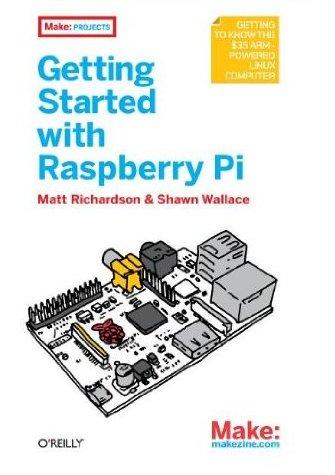
"There is some sophisticated stuff in here that may be beyond the abilities of the younger audience. Indeed, it may well be beyond the parent as well unless they have previous experience of computer operating systems."
(8/10)
Author: Matt Richardson and Shawn Wallace
Publisher: O'Reilly
ISBN-13: 978-1449344214
Pages: 180
Price: £11.50
I can't quite determine who the target audience for this book is. If it's 10-12 year olds then the content is about right. However, the raspberry pi was created, at least in part, to encourage new entrants for computer science courses at university to have some programming skills; in which case I would put the age reange at 16-18. Or it may be just for the enthusiastic amateur. In the latter two cases then I find the hand drawn diagrams a little childish and insulting.
So let's proceed in the basis that it's a children's book. It's quite good at that giving a basic overview of the Raspberry Pi and some simple projects to do with it. The chapter on scratch (a visual programming language) confirms my "children's book" theory since I can't see this being used by anyone apart from the under 10s. There is some sophisticated stuff in here that may be beyond the abilities of the younger audience. Indeed, it may well be beyond the parent as well unless they have previous experience of computer operating systems.
It's quite expensive considering a Rapberry Pi itself is only about £30! Finding a copy on Amazon for half that price seems much more reasonable or you could trawl the Rapberry Pi website and garner sufficient information there and avoid the expense altogether. The english used within it is sometimes lacking: is it me or should the title be "Getting Started with the Raspberry Pi"? There is also some bad proof reading and typesetting errors that detract from the book (page 9 and page 11 specifically).
Bids, Proposals and Tenders - Succeeding with effective writing

"If you want an easily readable overview of writing bids then this book does what it says on the cover."
(8/10)
Author: David Nickson
Publisher: BCS
ISBN-13: 978-1906124892
Pages: 140
Price: £24.99
This is only a short book and that makes it easy to read and digest. It is quite repetitive but that's expected because the author is constantly pushing the bullet points of conciseness, focus, targeting the audience and how to use active rather than passive language to create a bid document.
At only 140 pages you can read it in a couple of hours to get the quick overview and then focus in on the chapters that may require more of your attention. It does not cover all the details of tendering because that's not its purpose and (for example) the legal parts of proposals must be more rigid in the use of language. This is also a positive thing because it does not sideline the main arguments but makes you aware that this book is not a complete treatment of the subject.
The only criticism I can really make is that it lacks real worked examples; much of the examples are anecdotal rather than giving much in the way of details and this does leave the reader wondering how to craft various sections of a bid. A few examples would not have gone amiss.
If you want an easily readable overview of writing bids then this book does what it says on the cover.
Building Android Apps with HTML, CSS, and JavaScript
"it does contain some really interesting pieces of information about how to apply your existing skills to the Android platform"
(9/10)
Author: Jonathan Stark with Brian Jepson
Publisher: O'Reilly
ISBN-13: 978-1449316419
Pages: 178
Price: £22.99
This is an interesting book to read from an academic point of view; it's well written with a couple of examples that run through the book. It's quite a short book so you can grasp the essential elements contained within it very quickly indeed. There are parts that I don't like - for example, the introduction to HTML, CSS and JavaScript itself seems a bit superfluous since it's aimed at people who have those skills and want to enter the Android Market. Similarly, the use of jQuery, jqTouch and webSQL is given a light treatment, whereas I think that those parts could do with a bit more coverage.
However, it does contain some really interesting pieces of information about how to apply your existing skills to the Android platform. I'm not entirely convinced that transforming your web-based application into a native Android application is really the way to go but the information is there if you want to do it.
Overall, you can get through just reading the book in an evening but it is worth going through the examples and trying different things out for yourself. There are some powerful enablers of the web on a mobile platform in here and some useful tips and tricks you can employ.
Alan Turing and His Contemporaries: Building the World's First Computers
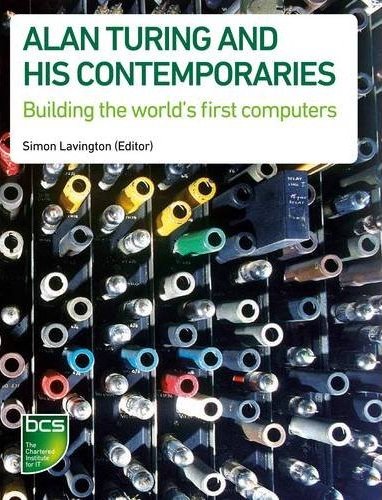
"A good overview of the development of the British computer industry"
(9/10)
Author: Simon Lavington (editor)
Publisher: BCS
ISBN-13: 978-1906124908
Pages: 100
Price: £12.99
This year marks the centenary of Alan Turing's birth and this book is about his (and others) work covering the post-war period (1945-11005). It's an interesting read and covers the major British computer developments from Turing and his contemporaries during this period.
It's written in a straightforward way and the technical detail is sufficient to enable one to grasp the basics without overshadowing the book with too much information. There's an interesting appendix with a table of the major machines during this period and how they would compare against one another.
One of the best parts of the book is the emphasis on "contemporaries" - this is not just a book about Alan Turing but others who were working in the field at the same time and their contributions to the embryonic computer industry of the day. A good overview of the development of the British computer industry.
It's a short book (100 pages) and this is an advantage because it covers the essential details of the times but does not have the space to dig deeper - it leaves further detail to a reading list at the end of the book.
Application Security for the Android Platform: Processes, Permissions, and Other Safeguards
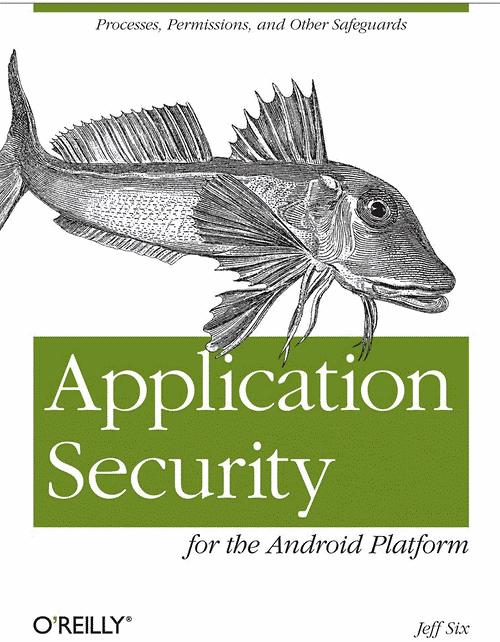
"This is a really good book if you want to develop android applications."
(9/10)
Author: Jeff Six
Publisher: O'Reilly Media
ISBN-13: 978-1449315078
Pages: 114
Price: £13.99
I recently reviewed a book "Learning Android" that developed an android application from scratch. The emphasis there was developing the application; this book goes that bit further and discusses security implications when you develop android applications.
It's easy to read and constantly challenges the reader to think through the implications of various decisions as you go along and this helps get the developer to get into the the mindset for securing the application. However, it's not meant for a reader without any familiarity with andorid development. Indeed, you will need to be aware of Intents and Content Providers, etc. because these terms are used before they are really defined later on in the book. A glossary may have helped here to give wider appeal.
I think that the book has been deliberately kept short so that it can be read quite quickly and the essential details exposed to the reader. Read it. This is a really good book if you want to develop android applications.
Learning Android
"This book does a nice job on developing an application for the android market"
(9/10)
Author: Marko Gargenta
Publisher: O'Reilly Media
ISBN-13: 978-1449390501
Pages: 270
Price: £26.99
This book is based on the authors own training course materials to develop an android application from scratch and it does exactly that. It starts with a quick overview of the android programming model and then gives instructions on downloading and installing the Android SDK - and this is the only part of the book that I didn't like much; I'm familiar with eclipse tooling but it was still not obvious from the instructions how the environment is set up. I think that this is because there is an inevitable lag between the eclipse version and the version used in the book.
However, once you get past that small niggle then the chapters are very well explained and at the end of each the application is still working and has had an enhancement so you can see the outcome straight away rather than having to got through multiple development cycles before you see any real benefit. This is a big plus to the book and shows that the example has been carefully thought out and, although it's a simple application, clearly developed.
At the start there is a picture of all the components and how they interact with each other, whilst each enhancement is being made in each chapter the overall picture or goal is also updated so that you can see how the components fit together. This book does a nice job on developing an application for the android market, it's well explained and concise and, therefore, recommended.
Smashing HTML5
"Take my word for it: this book is light on content and heavy on paper"
(3/10)
Author: Bill Sanders
Publisher: Wiley
ISBN-13: 978-0470977279
Pages: 368
Price: £24.99
I have a confession: I've never read Smashing Magazine and didn't even know of its existence until this book arrived. It's the sister publication to this series and if this book is anything to go by I don't think I'll be taking a subscription to the magazine any time soon.
Let me explain. On the back of this book it says, "True to the Smashing mission, the Smashing Magazine book series delivers useful and innovative information to Web designers and developers." So far; so good. So, with great anticipation I start to read and it's soon clear that it consistently fails to deliver.
Maybe it's me but I was expecting a thorough description and exploration of HTML 5 and its new features, and it does cover some of that but in a superficial way. For example, the much heralded audio, video and canvas tags could warrant the whole book by themselves but they only get a chapter each and the examples are simplistic. I would have preferred a discussion between the use of video or canvas versus flash objects. I know that may be a subjective discussion but I would consider it more useful.
There is also much discussion of things that are pure HTML and not HTML 5 - for example, Chapter 2 discusses basic HTML tags that have existed since the inception of the web. Chapter 3 deals with CSS; Chapter 4 with colour values and Chapter 5 covers page layout. None of these are really "useful and innovative information" to anyone who has remotely used HTML. Who are these chapters aimed at?
There are also chapters on PHP, JavaScript and navigation strategies, which I understand are there to "round out" the subject but it means that in this book it reduces the amount of space available to other topics so they do not get a more "in depth" treatment. Shame.
The strange thing about this book is it's weight - it just too heavy. I took the "Windows 7 Tweaks" book I reviewed recently and made a comparison: that book is 372 pages and weighs in at 635g. This book is 356 pages and weighs in at 868g! This might sound trivial but it makes it uncomfortable to hold whilst reading it. Take my word for it: this book is light on content and heavy on paper.
Android Fully Loaded

"If you are considering buying an Android phone but want to know more about what it offers then this book is worth a read"
(5/10)
Author: Rob Huddleston
Publisher: Wiley
ISBN-13: 978-0470930021
Pages: 240
Price: £16.99
Having recently purchased an Android mobile phone this book came at an appropriate time. It's written for someone who does not have an Android and may want a fuller treatment of the facilities the phone provides. As such it does do quite a good job of covering the features of the phone. If you are considering buying an Android phone but want to know more about what it offers then this book is worth a read.
However, there are one or two parts of the book that I think unnecessary; for example there are a few pages of discussion on how to use Google Mail and iTunes, which does not really add to the Android experience. Indeed, having a google account is central to using an Android and I would guess that most people are already aware of this and have such an account.
There are also parts of the book that are missing in the sense that there are topics that should be covered but are not. For example, and this applies to any smart phone, given that all smart phones require a data plan and your accounts are saved onto the phone, what happens if the phone is lost or stolen? You've just lost the keys to your kingdom and (potentially) opened yourself up to identity fraud. Indeed, since a google account could include "google checkout" information your credit card data may no longer be safe. This is a big issue given that "228 mobile phones are reported stolen in the UK every hour" (Home office statistics). Can anything be done about this? Well yes, there are applications on the Android marketplace that can help - one of them can even wipe your phone of any data remotely (for a fee) but they are not discussed in this book - arguably a major omission. It focuses on other (fun) applications like Google Sky rather than security.
Finally, the book itself is just an import from America and so it does contain information that is not relevant to the European market, which I would consider laziness on the part of the publisher. There are also some errors (for example, the image of the phone in airplane safe mode is incorrect; a potentially dangerous mistake).
A big positive described in the book is to basically "dump the sat-nav" since google maps and google navigator as installed as standard. This is true but because the book limits itself to the USA it does not address the issue of roaming data charges in (say) Europe. Although these are capped by European Law to about £30/month this is still a significant cost and it's unlikely that you would "dump the sat-nav" in this scenario. I consider that to be misleading.
Overall it's a good overview of the capabilities that an Android phone offers but with some omissions and a USA centric view that could be changed to make it much a much better treatment of the subject. The published price is a bit high but a quick search on Amazon reveals a discounted price of 50% off, which is a more realistic option.
Windows 7 Tweaks: A Comprehensive Guide on Customizing, Increasing Performance, and Securing Microsoft Windows 7
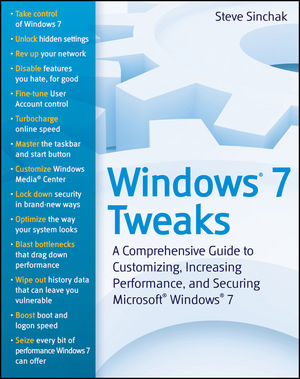
"save some trees and some money and buy something else"
(2/10)
Author: Steve Sinchak
Publisher: Wiley
ISBN-13: 978-0470525913
Pages: 408
Price: £19.99
This book appealed to me because I have just received a new Windows 7 laptop. Right, let's see what tweaks and customisations we can do to make it work quicker and better. Many of the tweaks you may have applied to XP or Vista will also apply in Windows 7; the only difference being where you might find the tweak. So, it's hard to justify the cost of this book on that basis. Can we really find anything in this book that cannot be found via a search engine? No, not really. Consequently, for a seasoned user of Windows this book has little merit; certainly, I never learned anything new.
What about novice users? Will they get more information out of this book? Not really, because it's so badly written; I suspect the editor just couldn't be bothered to read it when I came across sentences like, (p. 23) "One of the best parts of System Restore is that you can always undoing the recent restore ..." (sic). What's all that about?
Much of the content is about the Aero Glass interface and how to tweak that. This does not appeal since (IMHO) all users should just switch it off for performance reasons. There is also a chapter devoted to tweaking Internet Explorer 8, which does not make any sense since many of the tweaks are already provided by other browsers. The best advice there would be "do not use IE 8".
There is a whole chapter devoted to installing Windows 7, which is stretching the definition of a tweak beyond reason. Finally, there are pages and pages of policies and an explanation of what they do. For example, policy "Lock the Taskbar", explanation; "Controls the locking state of the taskbar. A locked taskbar does not allow any changes to be made to it". Who decides this is useful information to impart to the reader?
So, overall, save some trees and some money and buy something else.
The CSS Detective Guide: Tricks for Solving Tough CSS Mysterie
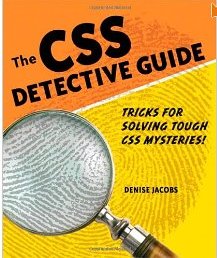
"I liked this book, it's clearly written and contains some genuinely useful tips and tricks to get your CSS style sheets to behave"
(7/10)
Author: Denise Jacobs
Publisher: New Riders
ISBN-13: 978-0321683946
Pages: 288
Price: £25.99
I liked this book, it's clearly written and contains some genuinely useful tips and tricks to get your CSS style sheets to behave. It's split into two main parts; in part one we learn about typical tools to use to investigate issues and some of the quirks of various browsers; this part can be read on the train, etc.
In part two there are six separate examples of problem CSS and each one is carefully described and solved. This is where I think the book fails: there are pages and pages of output and you find yourself flipping backwards and forwards between the source code and the screen shots showing how each tweak gets the solution nearer. I searched the newriders.com website but could not find a downloadable version of these cases, which means that they become more of an academic exercise rather than a potential hands on experience. This is a big mistake and detracts from the purpose of the book.
However, overall it's not a bad book, but it could be better with downloadable materials.
HTML and CSS: The Good Parts
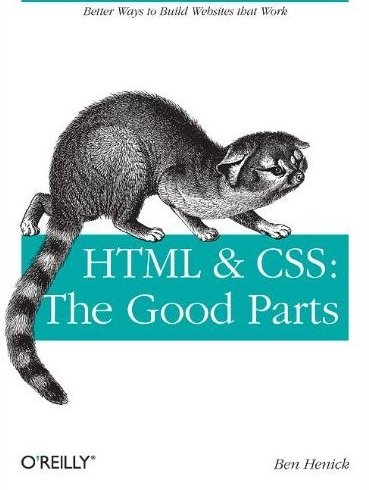
"There are too many errors in the book to make me wonder what the editor was doing at the time"
(3/10)
Author: Ben Henick
Publisher: O'Reilly
ISBN-13: 978-0596157609
Pages: 352
Price: £26.99
I wanted to like this book, I really did. It's quite good at describing why web standards are important and why you, as a web master or designer, should be aware of them and stick to them. It discusses at great length the benefits of standards adoption. However, the main issue is that it is poorly written and presented. The examples are not clear, the explanatory text is too cryptic and the diagrams do not convey much in the way of enlightenment. There are too many errors in the book to make me wonder what the editor was doing at the time.
Like most technical books these days it comes with a corresponding website (www.htmlcssgoodparts.net) and this site does nothing for the reputation of the book or author. You should be able to download the example CSS code, but it's very hard to find and the site difficult to navigate; try it and see what I mean.
It's a shame because the concept and book hold so much promise.
Getting Noticed on Google
"It's probably at the right price point but more of a book to take out of the library rather than add to your own"
(4/10)
Author: Ben Norman
Publisher: In Easy Steps
ISBN-13: 978-1840783322
Pages: 192
Price: £10.99
I can't work out who the target audience for this book is: the web design professional or the amateur who wants to know more on google optimisation. If it's the professional then it's a disappointment because there is nothing much in the way of content that they should not know already. On the other hand, if it's for the amateur then it does a fair job of describing some of the techiques that can be employed. However, I find the layout sparse, too many well spaced bullet points and lots of screen shots hint at a lack of depth over presentation. Personally, I found the "helpful icons" of chilli (hot tip), elephant (remember) and cobra (beware) to be rather childish for a mature audience.
It does cover much of web site optimisation from design to deployment, including free tools and services that can be leveraged to analyse or enhance your site, however, much of it can be found on google using the search "SEO optimization". I do like the fact that it encourages design to standards and validation of the results and moves you away from "black hat" methods that will do more harm than good to your site in the long run. It also encourages you to get it right from the start rather than optimize as an afterthought.
It's probably at the right price point but more of a book to take out of the library rather than add to your own.
Rails for PHP Developers: Refining Web Applications
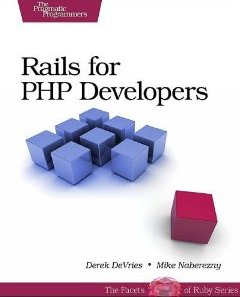
"it's well written, with plenty of examples to reinforce the salient points, and makes enjoyable and easy reading"
(10/10)
Author: Derek DeVries, Mike Naberezny
Publisher: Pragmatic Bookshelf
ISBN-13: 978-1934356043
Pages: 430
Price: £28.50
This book does exactly what it says on the front: it gives a comprehensive overview of Rails from the perspective of the seasoned PHP developer and it does it very, very well.
There is no attempt to convert you from PHP to Rails (that is left for you to decide) but it uses examples to show how web functionality is implemented in PHP and how the same can be achieved in Rails. Indeed, the authors still produce both PHP and Rails code in their own projects.
It does concentrate on PHP 5, which is where the O-O really started to bite, so those still using PHP 4 may find it more challenging but it's worth the effort. If you plan to try a serious project in Rails, then Chapter 11 will be where you spend most of your time since it contains a really good PHP to Ruby basics reference.
Overall it's well written, with plenty of examples to reinforce the salient points, and makes enjoyable and easy reading. If you want to know what all the fuss about Rails is or even if you are just curious about how Rails differs from PHP then this book is for you.
Fedora Linux
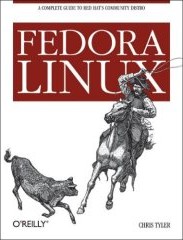
"If you want to start using Fedora but don't know where to start then this book is for you"
(9/10)
Author: Chris Tyler
Publisher: O'Reilly Press
ISBN-13: 978-0596526825
Pages: 656
Price: £30.99
Sub-titled as "A Complete Guide to Red Hat's Community Distribution", this book offers a comprehensive tutorial of the Fedora Core (6) offering from RedHat but could be equally applied to other Fedora versions or even variants like CentOS. It's a Grand Tour of the installation, maintenance and management of the distribution. It is well written, clear and concise in many of the explanations and an easy read.
It makes few basic assumptions on the part of the user; it endeavours to enable the reader to be confident when working with Fedora and it does it rather well. There are hands-on sections, which are the primary goal, but also some good descriptions of things like run levels, user login sequence, logical volume management, RPM packaging and it is even-handed in its approach - each task or section is described from the GUI and the command line point-of-view. It also covers the spectrum of users from laptop through desktop to servers.
There are one or two errors in the text, which should have been picked up by the editor, that detract from the work but overall it's a useful and pretty much complete treatment of Fedora. If you want to start using Fedora but don't know where to start then this book is for you.
Pro Apache
"The configuration section is particularly good with a comprehensive description of Containers and how they nest"
(9/10)
Author: Peter Wainwright
Publisher: Apress Press
ISBN-13: 978-1590593004
Pages: 878
Price: £39.49
Want to set yourself up as an ISP? Build yourself a Linux or Windows box, get a broadband connection and buy this book; its well written and informative about all aspects of installing, configuring the Apache HTTP Server and easily readable by the beginner or more experienced user alike.
It gives clear instructions about setting up multiple web sites, improving the performance of Apache and tips and techniques for improving the security of the sites hosted. The configuration section is particularly good with a comprehensive description of Containers and how they nest.
There is a section on extending apache with several examples; including PHP and mod_perl but not (curiously) any database engine. However, the biggest downside to the book is that the appendixes (sic) - all ten of them and running to some 81 pages are not in the book itself but are available for download from the Apress Web site. I can see why some of these would be done like that, for example, the list of useful RCF's or details of variants of Apache, but others would have been better placed as real appendices Directives by Module and Directives by Name to name just two. It's hard to imagine what took place at the Editor's meeting to decide on this strategy and demerits the book by one star. Overall, though, it's a useful reference companion to have on the bookshelf.
The Definitive Guide to Linux Network Programming
"For the more experienced user or a Subject Matter Expert then it's really a reference guide but not really laid out for those users in a useful way"
(2/10)
Author: Keir Davis, John W. Turner, Nathan Yocom
Publisher: Apress Press
ISBN-13: 978-1590593226
Pages: 372
Price: £39.49
This book aims to be the "Definitive Guide to Linux Network Programming", however, it's only 350 pages long and once you take out all the repetition it would be considerably shorter than that. If they had called the book "Linux Network Programming from Scratch" it would have been a much more accurate and appropriate title. It contains good examples from a tutorial point of view and guides the reader carefully through the code. For the more experienced user or a Subject Matter Expert then it's really a reference guide but not really laid out for those users in a useful way.
The chapters cover topics outside the network programming model but useful nonetheless, for example, ssh tunnelling and encryption, but it also includes details that are inappropriate for this volume. As an example, there is a large section on programming techniques, which is more approriate in a book on programming languages. In this respect it's rather confusing in it's aims and objectives - you should not approach this book without being a reasonably experienced programmer (independent of which language you know) so I conclude that these parts are just superfluous padding.
However, my two biggest gripes with this book are that, firstly, nearly all the code samples contain errors and some quite serious errors if you are a newcomer to Network Programming - you simply must downoad the samples from the apress website, where they do work. Secondly, the phraseology used in places is just too imprecise - occasionally to the point of confusion. In the first chapter "Networks and Protocols", which is aimed at a complete beginner, we find, "We've said that an Ethernet frame has a maximum size of 1500 octets. Yet an IP datagram has a maximum length of 16 bits". The italics are mine and I had to read the second sentence twice before I got the meaning - that an IP datagram uses a 16 bit value to specify the size of the payload i.e. that it can carry 65536 octets.
The confusion of it's aims and objectives, the imprecise langage, the faulty code and the repetition seriously impact the value of this book - it's just too expensive for the intermediate or expert to rate more highly in star value.
Beginning PHP, Apache, MySQL Web Development
"You can't deny that it touches on almost every aspect of AMP design that a beginner could wish to know about"
(10/10)
Author: Michael K. Glass, Yann Le Scouarnex, Elizabeth Naramore, Gary Mailer, Jeremy Stolz,
         Jason Gerner
Publisher: Wrox Press
ISBN-13: 978-0764557446
Pages: 720
Price: £26.99
The AMP triumvirate (comprising of Apache, PHP and MySQL) is one of the cornerstones of web development and this is an excellent book for learning the use and interaction between them. It takes the reader through a carefully constructed series of exercises to demonstrate the salient points under discussion and provides clear and concise explanations behind the code. The book is well laid out with code first then a 'How it works' explanation followed by a 'Ty It Out' section. The code itself is downloadable from the Wrox website. It covers the whole gamut of AMP program development including appendices on installation of the separate products for Windows and Linux platforms.
It's breadth of coverage is impressive for a beginners book: basic PHP and HTML page creation, how PHP works with MySQL, forms and validating user input, personalization (using cookies, MySQL verification and simple htaccess methods), sending e-mail using PHP, mailing lists, content management systems and basic shopping carts. You can't deny that it touches on almost every aspect of AMP design that a beginner could wish to know about.
There are only a couple of small gripes (and those are personal preferences really). The first is that they use two examples throughout the book. IMHO it would have been better to develop a single application for consistency. Secondly, there is a glossing over (or simply not enough explanation) of third normal form within database design and why it is desirable. The former is an omission the latter something that could be argued in a beginners book.
You could buy separate books for each of the modules but this beginners guide covers the lot at a reasonable price and does it very well. Highly recommended.
The Ultimate VB.NET and ASP.NET Code Book
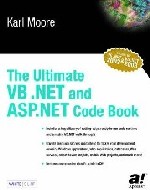
"My review copy of this book is being offered up on auction sites (with no reserve) as soon as I submit this review. I would have preferred to give it no stars at all"
(1/10)
Author: Karl Moore
Publisher: Apress Press
ISBN-13: 978-1590591062
Pages: 376
Price: £35.50
The short answer is ... No. This is, without doubt, the worst book that I have read. Ever. It has little to recommend itself to the reader. Any book with a title of the form 'The Ultimate ...' had better be just that; this book is nowhere near good enough.
The evangelistic style is annoying and as such it grates as soon as the first deficiencies are noticed. If you really are going to make claims about 'clever code' then it should be just that ... in chapter 8 there are lists of regular expression matching samples that cleary (and simply by inspection) do not work. A date checker that accepts 99/99/9999 as a valid date? An ISBN number checker (how useful is that!) that would fail just by entering the number printed on the back of the book! This is shoddy workmanship by any standard.
Interestingly, the first chapter, which is an overview of the new features of VB.NET over VB6 (and why you should move to VB.NET), demonstrates a typical feature of Microsoft marketing. Get a product to market as soon as possible and then fix it later (if ever). The 'new' features (of VB.NET) (increment/decrement operators, block level scope, pass by value, arrays starting at zero) have existed in all professional programming langauges for years, so (by implication) VB6 was a hobbyist programming lanugage that should never have been used in a professional capacity. VB.NET clearly takes the programmer into the realm of professional programming but still contains a fundamental flaw ... it requires IIS, which is still rated as the most insecure and vulnerable web server in the world.
Other chapters cover building web sites, manipulating data, web services, .NET secrets and the last chapter is a discussion of how to convert VB.NET to C#. If this is an Ultimate code book then what's the purpose of this chapter? The layout (the first from apress I have seen) is unacceptable; there are no section numbers so you simply do not know where you are in the book. At the start of each chapter is a list of what's in the chapter . I can't see the reason for this apart from padding the book out by an extra 40 or so pages; it serves no useful purpose. A nice feature is that every section starts with a statement 'Download supporting file at ...' and gives you the reference. However, once you inspect the code in the section itself you realise that there is little point in that.
At 380 pages and £35.50 it's way overpriced and a search on the web would provide equally (or more) robust pieces of code. My review copy of this book is being offered up on auction sites (with no reserve) as soon as I submit this review. I would have preferred to give it no stars at all.
Perl in a Nutshell

"Highly recommended as a first source of information, if they beefed up the databases section it would become indispensable"
(10/10)
Author: Ellen Siever, Stephen Spainhour & Nathan Patwardhan
Publisher: O'Reilly and Associates Inc.
ISBN-13: 978-1565922860
Pages: 674
Price: £18.95
By and large desktop reference books should give you most of the information you need at your fingertips but cannot provide complete coverage of a given topic. When it comes to perl, the language and extensions are so large that any desktop reference will only 'scratch the surface'. That said 'Perl in a Nutshell' does a rather good job of giving the user pertinent information and pointers to other sources that are beyond the scope of the book. It is a very good reference guide and a convenient size.
There are eight sections - each comprising a number of chapters including: Getting Started, which gives advice on installing perl on your system; Language Basics, covering the basic syntax of the language, scalar and list contexts, debugging and a comprehensive function reference; Modules, what they are, how to create them and a list of the main modules shipped with perl and the methods associated with each module; CGI, the web interface and a description of mod_perl for the Apache web server software; Databases, this is the main weakness of the book (just 11 pages long), giving scant information on database interactions - it needs a much fuller explanation and examples of using DBM files; Network Programming, which includes socket programming, SMTP, FTP, usenet news and the LWP library; Perl/Tk, an entire section on it's own that describes the interface between perl and the Tk widgets and Win32, which gives specific information on the win32 methods and using perl-script.
At 654 pages and £18.95 it's certainly good value and a very hand reference book for your desktop or briefcase. Highly recommended as a first source of information, if they beefed up the databases section it would become indispensable.
Perl Cookbook: Tips and Tricks for Perl Programmers
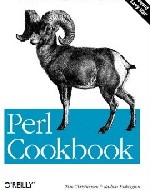
"The discussion provides an excellent opportunity to discover some arcana about perl and it certainly corrected one or two misconceptions for me"
(8/10)
Author: Tom Christiansen and Nathan Torkington
Publisher: O'Reilly Media
ISBN-13: 978-1565922433
Pages: 800
Price: £24.95
Perl has been enjoying a bit of a renaissance over the past few years with the Web and CGI programming. For the serious perl programmer one needs to consult the Larry Wall's definitive book, 'Programming Perl' - 'The Perl Cookbook' is described as the companion volume to this and it's a fair assessment. Certainly, it's not readable by anyone not familiar with the language. However, once you got the basics under your belt then 'The Perl Cookbook' is about as good as it gets when re-cycling code.
The breadth of coverage is comprehensive and the depth and clarity of the explanations make it enjoyable reading - each chapter select a topic pertinent to a different aspect of perl, it then provides a basic introduction to the concepts and on to the 'recipes'. These are neatly laid out in three parts, the problem, the solution and a discussion as to why the solution is appropriate. The discussion provides an excellent opportunity to discover some arcana about perl and it certainly corrected one or two misconceptions for me.
Most of the major perl sub-systems are presented: scalar and array contexts, regular expressions, numbers and strings, file access, packages, libraries, modules, process management, sockets, classes, objects, tiers, CGI programming to name but a few.
The order of the chapters is a little odd for my liking but that's a personal gripe considering it's a cookbook and by definition something to 'dip into'. I felt that the section of CGI programming could be beefed up a bit - yes, I know it's cheesy but a 'web page counter' example is perhaps one of the more obvious omissions.
The full source is available on the web at http://ftp.oreilly.com/published/oreilly/perl/cookbook/ but given the book itself makes extensive reference to the CPAN archive a CD with the source code and a copy of the archive as well would be a useful value add to the product.